


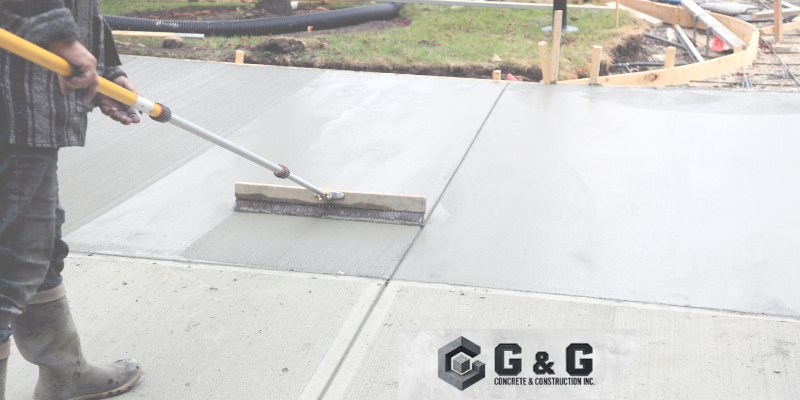
Did you know that unsealed concrete driveways begin deteriorating as soon as they dry? Sunlight, extreme temperatures, humidity, rainfall, and even carbonation caused by pollution can cause concrete driveways to rapidly deteriorate. Beyond natural environmental stressors, oil and transmission leaks, vehicle traffic, and salt can all shorten the life of an unsealed concrete driveway.
Most professional concrete driveway installations end with sealing, once the initial slab has cured. In many cases, the advantages of sealing a driveway far outweigh the disadvantages, but there are still some situations where sealing isn’t recommended.
Pros
- Repels Moisture & Humidity: Moisture is one of the leading causes of cracks in concrete driveways. Once cracks appear in driveways, it only gets worse from there.
- Prevents Hard Staining: Cars that stay parked in driveways often leak, and these chemicals can cause hard-to-remove stains.
- Extends Driveway Lifespan: This is arguably the most important advantage. A sealed concrete driveway helps extend the lifespan of concrete to around 30 years.
- Prevents Color Fading: If you have stained or stamped concrete, sealing it can help preserve the color.
- Blocks Algae, Mold, & Mildew Growth: Certain molds can break down concrete over time, and sealing inhibits harmful mold, algae, and mildew growth.
Cons
- Minor Safety Hazards: They can be slippery when wet and dry, depending on what type of sealer is used.
- Not a One-Time Task: Resealing is usually necessary every few years (usually 3-5), especially if your driveway is a high-traffic area. However, routine resealing pays for itself in the long run by extending the durability of your concrete driveway.
- Potential Toxicity: Some driveway sealers are toxic to pets. If that is a concern, look for a non-toxic formula that’s still appropriate for exterior use.
- Wait Time for New Slabs: Applying sealer to a newly poured concrete driveway before it’s fully cured can make the concrete more vulnerable to damage.
Curing & Sealer Type: Where Most Risks Are Hidden
If you work with a licensed and insured concrete construction professional, the risks of sealing a concrete driveway are virtually non-existent. Risks increase for DIY projects, especially when proper research isn’t performed.
Sealing your driveway is only non-advantageous when a) the slab hasn’t fully cured (note: cured is not the same as dried), and b) the wrong type of sealer is used.
Cure Time
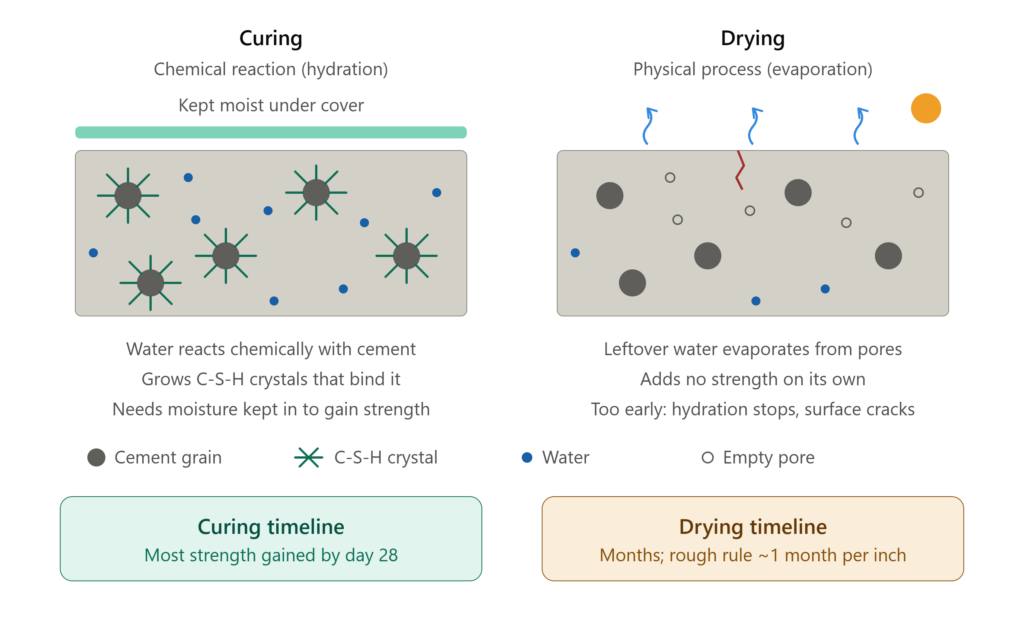
Drying and curing are not interchangeable. They are two different processes. Drying is the natural process of moisture being removed from the mix and is heavily based on the environment (e.g., humid environments increase drying time), while curing is a chemical process that hardens the concrete. In many cases, you can walk on concrete and, to a certain degree, drive on it after it’s dried to the touch. However, the concrete won’t reach full strength until it’s allowed to cure.
Curing time depends heavily on the concrete mix and is stated on the manufacturer’s label. Generally, curing can last up to 28 days, but don’t treat this as a standard rule—always follow the manufacturer’s recommendations.
Most sealer formulas require concrete to be fully cured before it’s sealed. Sealing too early blocks moisture, which the concrete still needs to gain strength until it fully hardens.
Sealer
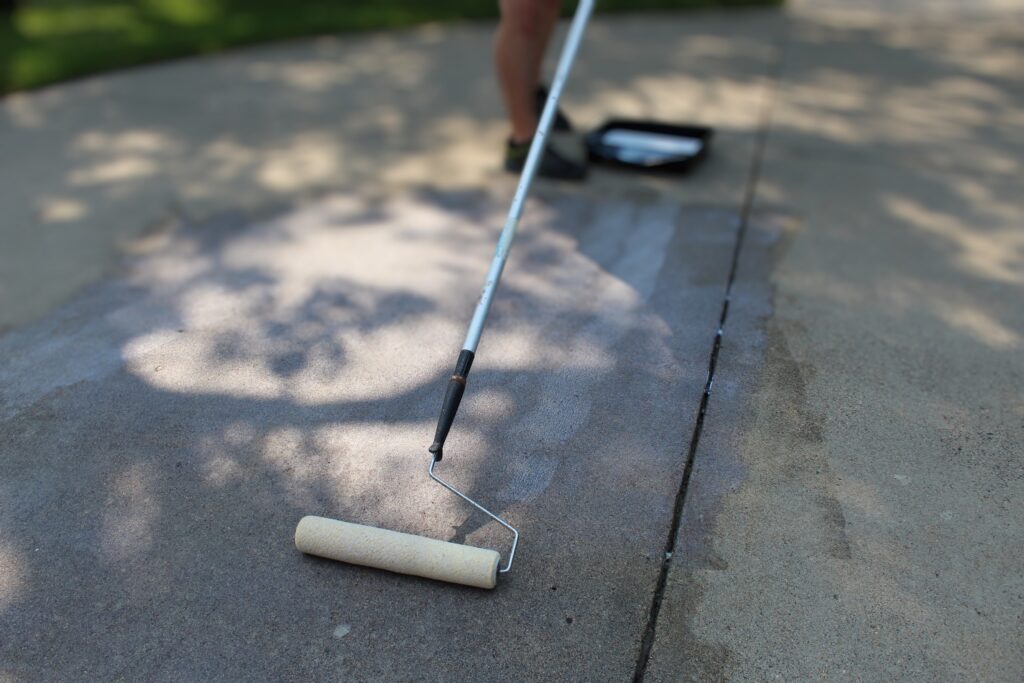
Walk into any home improvement store, whether Menard’s or Lowe’s, and you’ll find shelves upon shelves filled with sealers. It’s understandably overwhelming for homeowners taking on their first DIY project, but sealer type matters.
When selecting a sealer type, look for:
- Whether the sealer formula is labeled as for interior or exterior use.
- A penetrating formula containing silane or siloxane, which chemically bonds to the concrete and leaves no discernible finish
Other sealer types, such as film-forming acrylic and polyurethane, have their uses, but they’re not recommended for standard, non-decorative driveways because they aren’t as durable as penetrating formulas. Likewise, epoxy sealers create tough, strong barriers, but they also yellow under UV exposure, which is why they are primarily used to coat garage floors that require exceptional impact protection.
When Was the Last Time Your Driveway Was Sealed?
Periodic sealing helps extend the life of concrete driveways by providing extra protection against foot traffic, vehicle damage, and the elements. However, sealing is only beneficial if your driveway (or other concrete surface) is still in good condition. Sealing concrete that’s cracking, crumbling, or sinking is like slapping a band-aid over a gaping wound.
G&G Concrete & Construction can help you maintain your driveway, whether it’s fixing surface and structural damage, or providing periodic sealing.
If you’re not sure when your driveway was sealed, or you’ve noticed damage, contact us today to schedule an inspection.
