


Knowing whether to repair or replace interior flooring can mean the difference between creating a money pit and avoiding one. Concrete floors in commercial and industrial environments typically last upwards of 40 years, even under heavy usage, especially if they have robust reinforcement and have been properly maintained.
In many cases, repair is the first solution for most interior concrete flooring damage, but there are some exceptions.
Repair When…

In our experience, addressing early warning signs is the most cost-effective way to extend a concrete floor’s lifespan while improving workplace safety. When caught early, repair is almost always the solution, but if left to degrade or worsen, it can require replacement.
Generally speaking, you can repair interior concrete flooring in these situations:
You Have Abrasion Damage
Forklifts, pallet jacks, and other machinery often scrape the surface of otherwise good concrete floors, creating scratches and chips. Over time, abrasion damage roughens the surface and makes it unsafe for workers.
There’s Missing or Damaged Joints
Expansion joints are an important facet of structurally sound concrete slabs. Materials are inserted between flooring sections to offset the effects of expansion and contraction. Joint materials do not outlast concrete and require periodic repairs or replacement at some point.
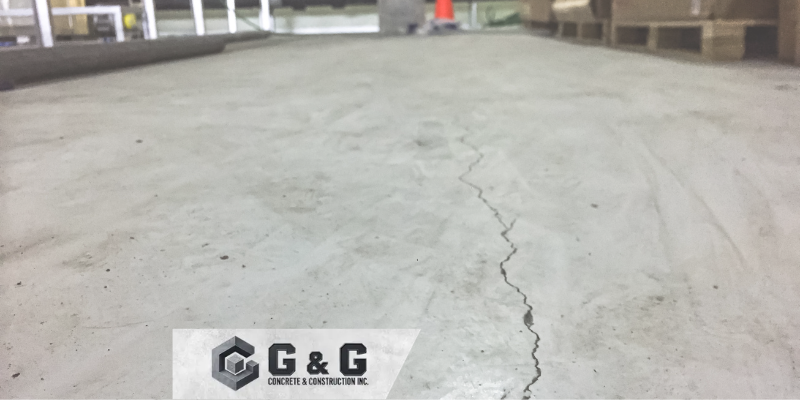
The Slab Is Stable With Shrinkage or Hairline Cracks
Hairline cracks are not necessarily a major concern, but if they go unaddressed, it’s likely the gaps will expand and reach a critical point. That’s why we strongly recommend repairing cracks before they exceed one-quarter of an inch.
Slab Edges Are Curling
Curling concrete slab edges is more concerning than many believe. It occurs when the surface and bottom of the flooring experience significantly different temperature fluctuations. If left unchecked, this can create a subgrade gap, leaving the slab structurally unsound.
Part of the Slab Is Uneven
Slabs generally become uneven because the soil underneath settles or shifts. This condition will likely only get worse unless they are professionally leveled.
Replace When…
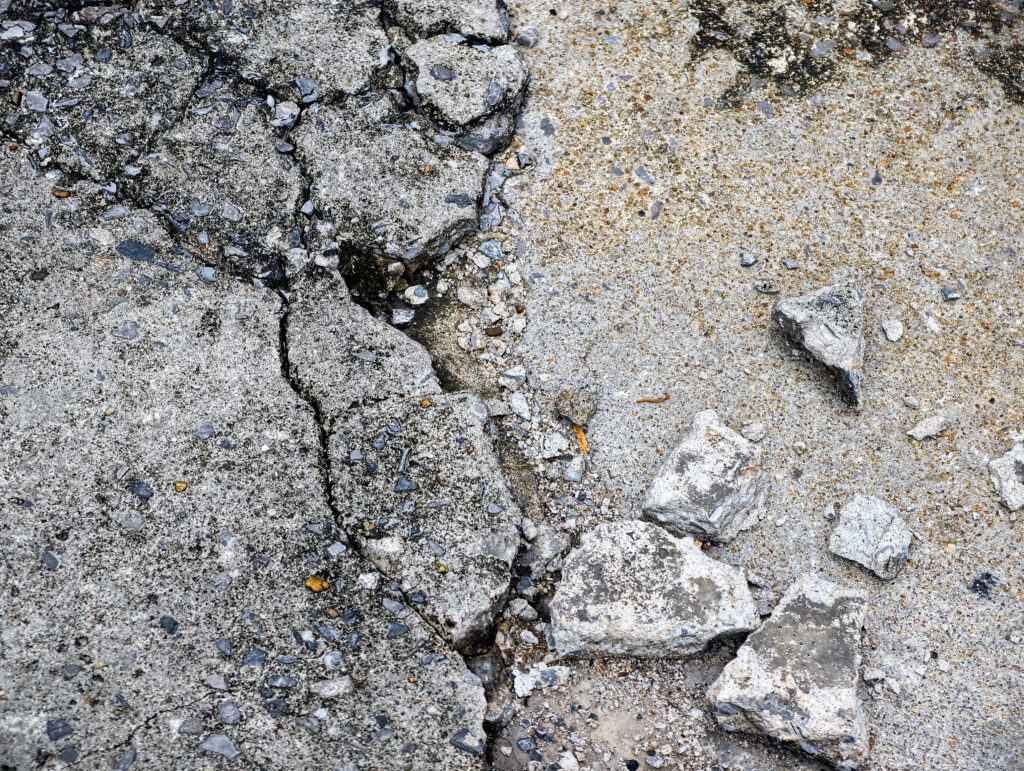
Although professionally installed concrete slabs can last decades, unchecked damage can shorten their lifespan. If you are dealing with concrete that hasn’t been properly installed or maintained, or that has sustained significant damage, patchwork repairs will be unnecessarily expensive.
These are telltale signs it’s time for a new concrete floor.
The Entire Subgrade Has Failed
The subgrade is the load-bearing infrastructure the slab rests on. Problems such as moisture turning packed soil into mud, decaying matter creating voids, and excessive loads lead to subgrade failures. Without an effective subgrade, the slab is unsafe.
You Need Better Reinforcement
In some facility upgrades, new equipment may not sync with the original flooring and may require heavier reinforcement or a thicker slab.
Your Entire Slab Is Deteriorating
Widespread imperfections and deterioration can sometimes be fixed with repairs. However, if the damage is so severe that repairs cost 50% or more of a replacement, opt for replacement instead.
Wide Cracks
Cracks that exceed one-quarter of an inch indicate shifts and weaknesses. If you see significantly wide, spreading cracks, the slab’s substructure or load-bearing integrity may be compromised.
Get an Assessment
G&G Concrete & Construction has more than 20 years of experience replacing and repairing industrial-strength slabs for warehouses, plants, and industrial facilities throughout Macomb County, Michigan.
If your concrete flooring is cracked, crumbling, stained, or showing other signs of damage, contact us today to schedule a free inspection. We can help you determine whether a repair or a replacement is the most cost-effective solution.
