


You already know that concrete is one of the best materials to use for patios because of its durability and versatile design options. Can you even think of a home that doesn’t have any type of outdoor concrete area?
The biggest challenge when designing a patio is finalizing the design. Unless you’re an extremely visual person, it’s difficult to picture something that doesn’t yet exist. With concrete, the design options are essentially limitless. However, there are two different categories of designs you can opt for: slab-based designs, like stamped concrete, and paver-based designs.
In this article, we’ll explore the benefits and limitations of each design type.
Stamped Concrete
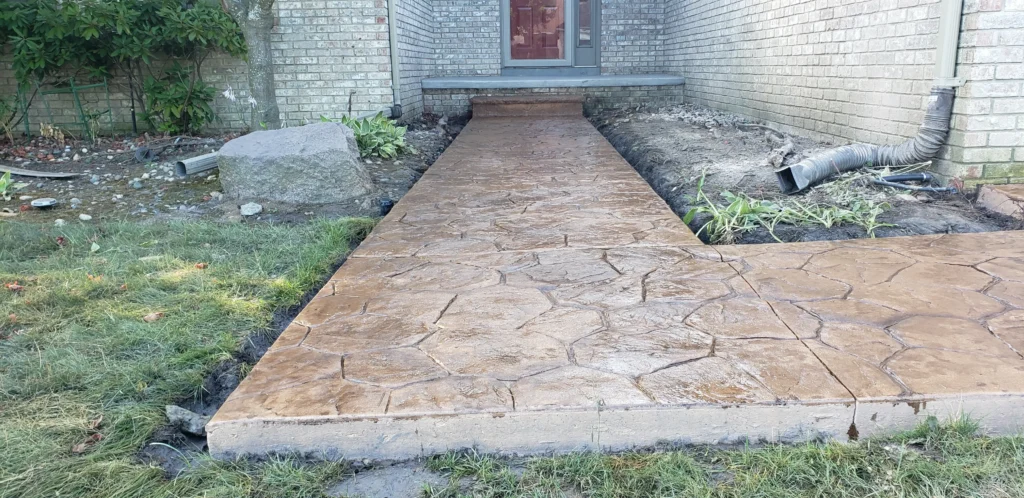
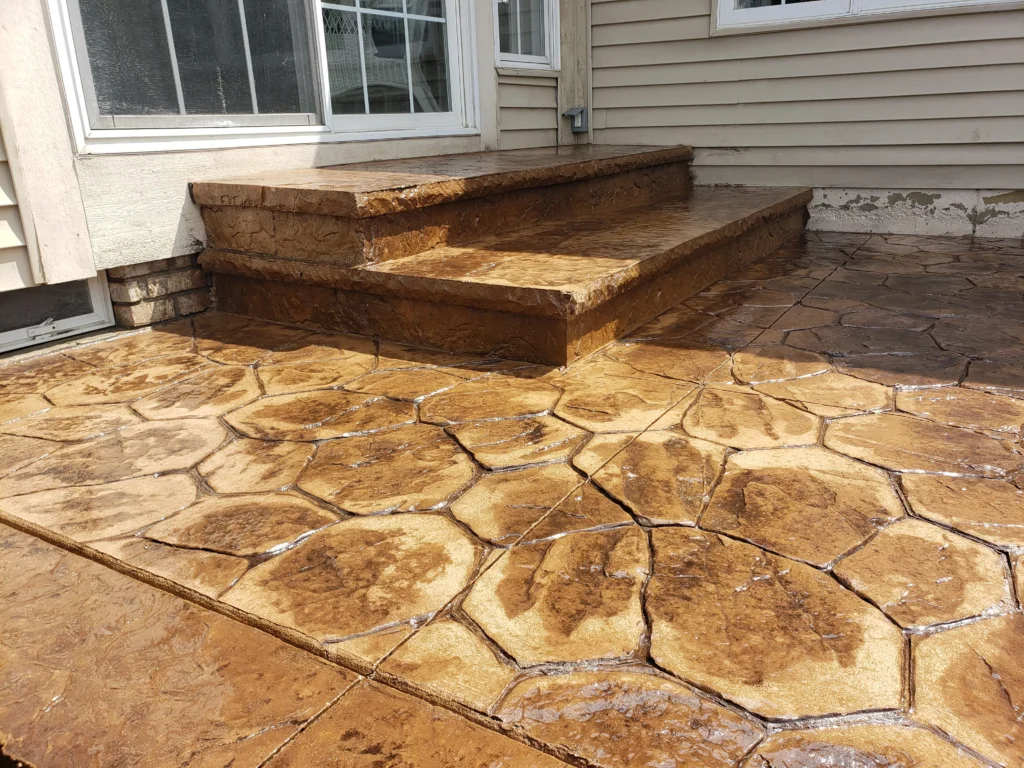
Concrete patios poured in one continuous slab can be stamped into specific patterns to mimic brick, stone, and other natural textures, as well as colored/stained in virtually any shade. With stamped concrete, the flexible mats are laid over the surface and tamped to create whatever pattern and texture you desire.
Costs
The total cost of stamped concrete will vary depending on the complexity of your chosen pattern, the thickness of the slab (and the size of the installation), and other finishing details like dyes or stains.
Generally speaking, installing a concrete slab costs less than installing pavers. Pavers can seem affordable when you’re looking only at the material costs, but they come with higher installation expenses than stamped slabs because each paver requires hand placement and finishing. Material costs ebb and flow, but you can expect to pay around $15 to 35 per square foot for stamped concrete slabs.
Longevity
Stamped concrete, if well-maintained and sealed, can last nearly five decades.
Design
You can create far more complex designs than with pavers without the cost associated with specialty trimming and manufacturing. When you pour a concrete slab, you can stamp it to mimic different textures and patterns, add decorative joints, and stain or dye it one or multiple colors.
General Benefits
- Customizable, High-End Look: Stamped concrete patios provide a high-end look even when basic materials are used.
- Affordable: While there are exotic paver options made with natural stone or specialty materials, they cost far more than decorative slab concrete.
- Low-Maintenance: Depending on the design, stamped concrete can come with lower maintenance as joints won’t need to be cleaned and resealed as often as with pavers.
Limitations
- Susceptible to Cracking: (Sometimes) lacks actual gaps between the segments of the stamped concrete, which prevents weed growth but does eventually lead to cracking.
- Preparation Requirements: Installation still requires soil leveling and compaction.
- Specialty Equipment: Must have access for a concrete truck or mixer to pour the slab, preferably in one continuous unit.
- “Low Maintenance,” Not “No Maintenance”: Requires regular cleaning and sealing every 5 or so years.
Pavers
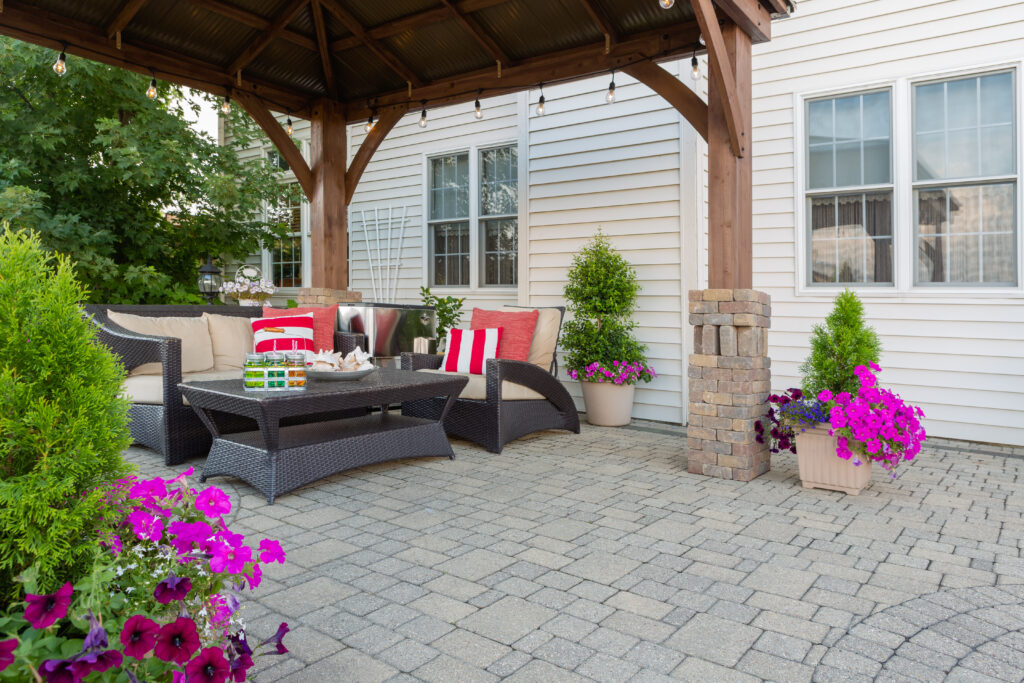
Pavers are individual pieces of concrete, brick, or natural stone that are laid onto a prepared bed of sand to create a space made of dozens or even hundreds of pieces. Small gaps left between the pavers (called joints) are filled with compacted polymer sand to prevent shifting and weed growth. The installation takes quite a bit of work, from careful ground-level and preparation to laying each paver individually.
Costs
Material costs for pavers start at only $5 per square foot, but they can soar to over $30 per square foot for natural stone and other luxury materials. Don’t forget you’ll also pay another $10 to $15 per square foot for installation, especially if you want proper drainage and support to improve the patio’s lifespan.
Longevity
Paver patios last a long time, assuming you keep up with the maintenance needs of the material you choose. You can get 25 years or more out of this kind of installation because the individual pavers shift on their own and resist cracking. However, you may need to replenish the sand bed, cut tree roots that are lifting part of the patio, or replace individual pavers over the years.
Design
Due to the need for joints between most pavers to allow natural movement, your design options are far more limited than with stamped concrete. These pavers still need regular cleaning and sealing, but they’re harder to redecorate with the application of stain when compared to stamped concrete.
General Benefits
- Long Lifespan: Pavers have a longer lifespan because they remain flexible, moving naturally as the soil below shifts from freeze-thaw cycles.
- Easy Repairs: If individual pavers are damaged, they can be lifted out and replaced.
Limitations
- Maintenance: Requires spraying or flaming to control weed growth between pavers and prevent unnatural shifting and damage. Plus, the bedding sand supporting the pavers will eventually need to be replaced.
- Limited Design Options: Style and size options are more limited than with stamped concrete
- Installation Complexity: The installation process is longer because each paver must be installed individually, and sourcing the material, depending on what type of material you choose, can take weeks.
- Safety Issues: Single pavers may sink or rise, creating trip hazards until you commit to releveling.
See Examples of Decorative Patios
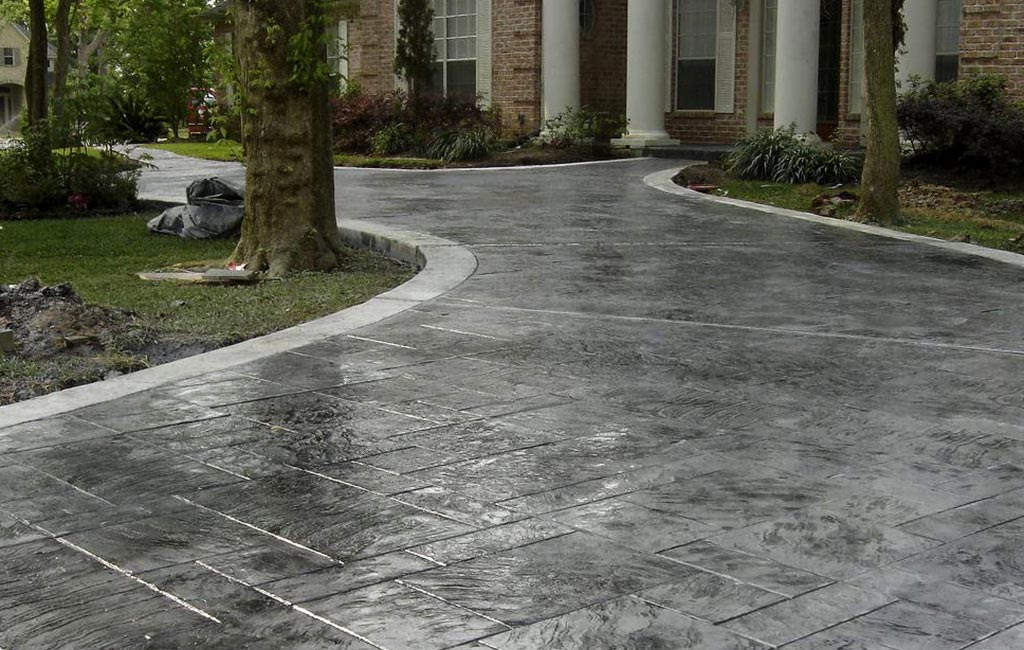
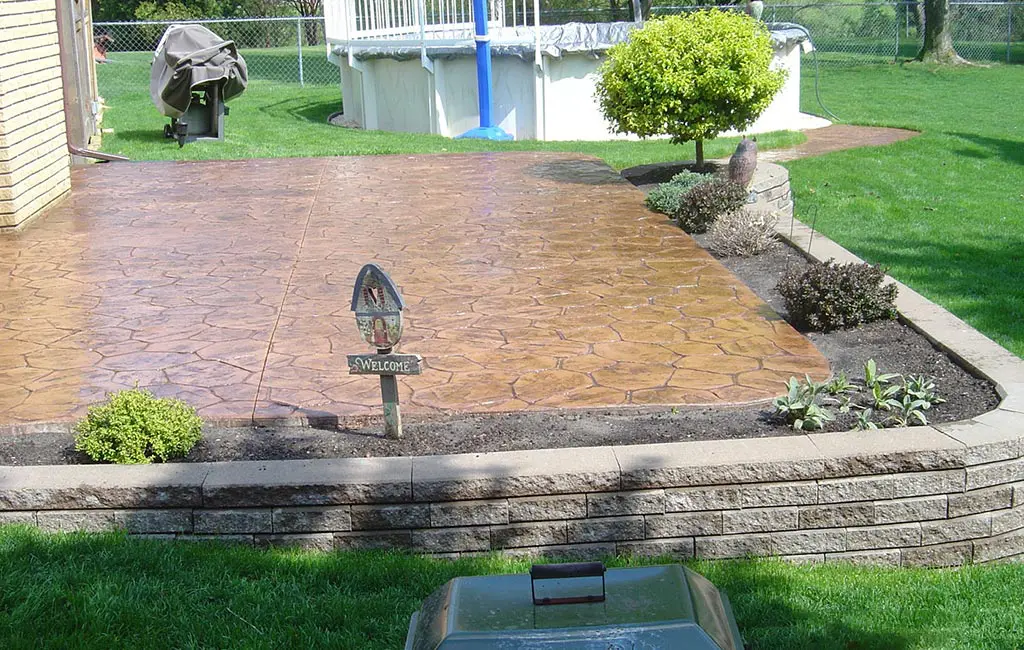
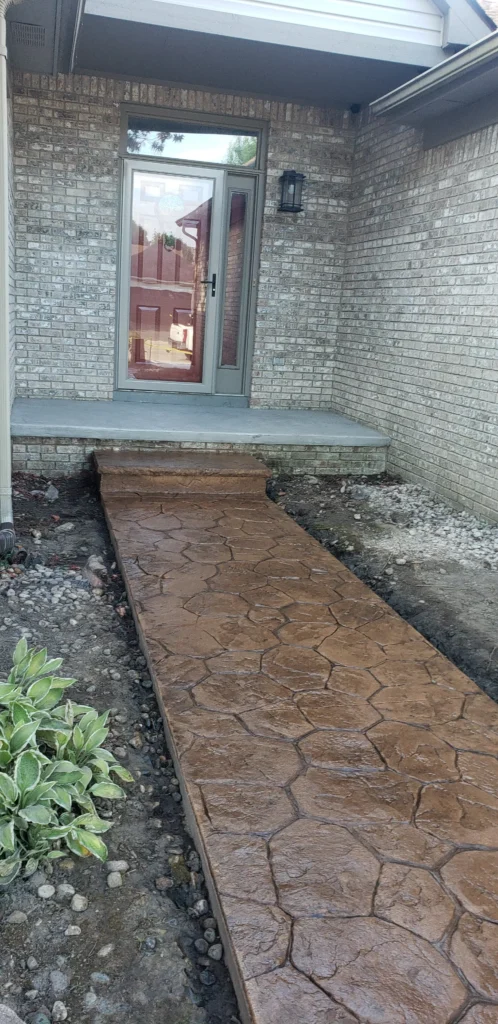
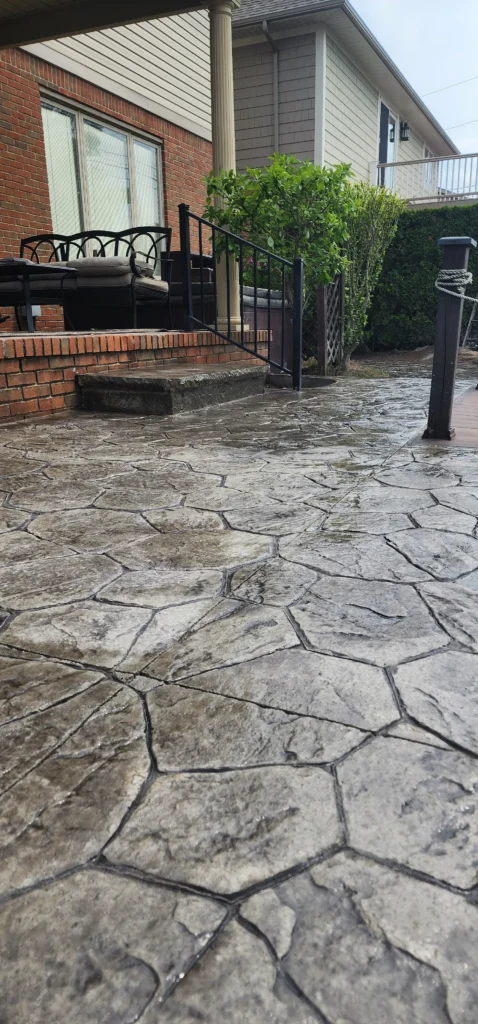
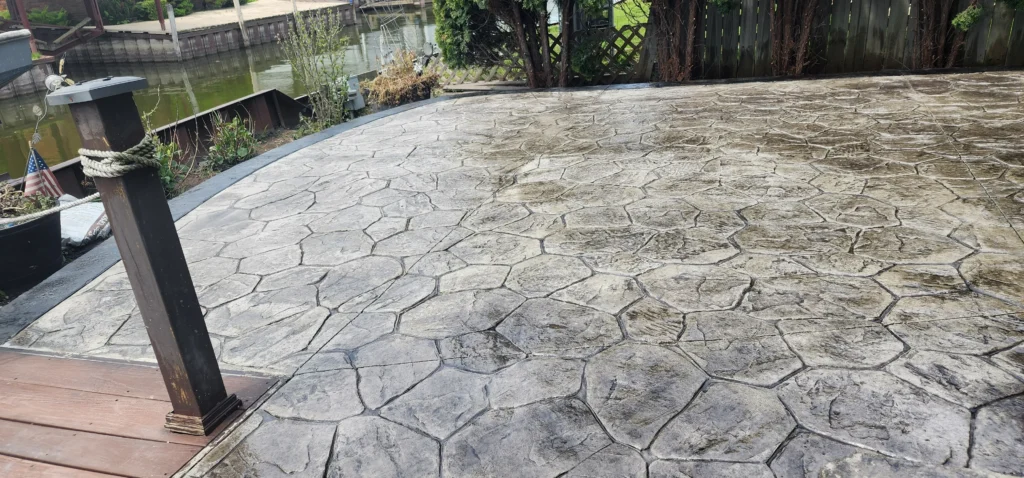
We know that design/appearance is always a homeowner’s first concern. We’ve already mentioned that stamped concrete provides limitless design opportunities, while pavers provide some design limitations, but if you’ve never had decorative concrete or been on a property with decorative concrete, it’s going to be helpful to browse through some example design options.
Below are some examples of patios we’ve designed and installed throughout Macomb County.

Schedule a Design Consultation
G&G Concrete & Construction provides in-depth concrete construction services, including stamped concrete installations, to homeowners across Macomb County, MI. If you still need help choosing a design or finding one that fits within your budget, contact us today to schedule a design consultation. We can’t wait to hear more about your project!
