


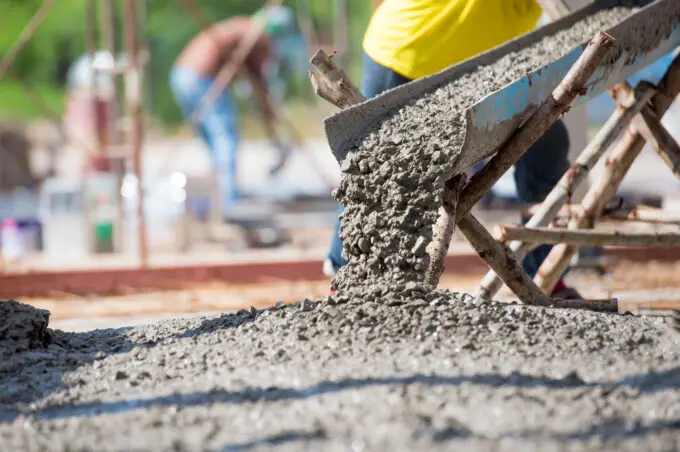
How concrete is mixed has a significant impact on the way the final product will look and how long it will last. In fact, the biggest and most costly mistake DIYers make is using poorly mixed concrete, and the ratio of cement, water, aggregate, and chemical admixtures is what helps determine the final product’s workability, strength, and durability.
One way professionals ensure their concrete mix is high quality is through a “slump” test.
How Slump Tests Work
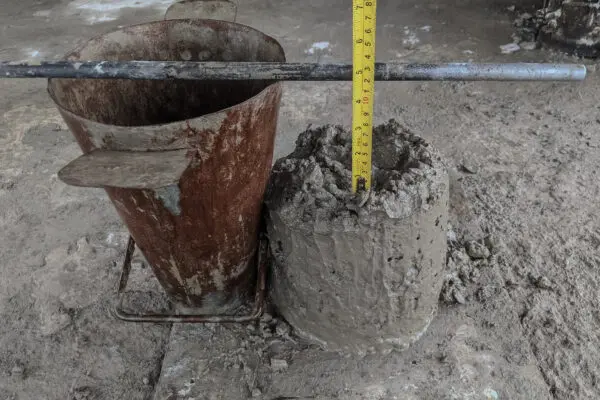
A slump test is a standardized way of measuring the workability and consistency of fresh concrete. Technicians will fill a cone-shaped form with fresh concrete and lift it up. While the concrete “slumps” down, technicians will pay attention to the distance it drops. That distance is measured in inches (in the United States).
How Slump Is Classified
Slump is classified as being either S1 or S5, with 1 being the lowest and 5 being the highest it can be. The number stands for the vertical distance in inches. So, if something is in the S1 class, the concrete is stiff and dry, which would make it incredibly difficult to work with. Likewise, if the mix is categorized in the S5 class, it has a very high slump, making it easy to pour because it has higher levels of water in the mix.
The tricky part is that there really isn’t an “ideal” slump; it depends on the application. S1 and S2, while harder to work with, are better for structural applications because they have higher strength, while S4 and S5 are better when applications require high flowability.
| Slump Class | Vertical Distance |
|---|---|
| S1 | 0.39-1.57 in. |
| S2 | 1.97-3.54 in. |
| S3 | 3.94-5.91 in. |
| S4 | 7.1-8.27 in. |
| S5 | 8.66+ in. |
The Consequences of Low Slump
Again—low slump may be required for a particular application. The primary challenge with a low slump is that it’s stiff and if not poured correctly, can cause honeycombing/voids and air bubbles. There’s also a risk that it may not bond well with existing concrete. However, if the right professionals handle the job, the low-slump mix can result in concrete that has higher strength and resistance to water, chemicals, and temperature extremes. Low-slump concrete also holds its shape better, which is why it’s commonly used in architectural projects.
Fixing Low Slump
If a low-slump concrete mix isn’t right for the application, contractors will add water-reducing admixtures, sometimes known as plasticizers, to improve workability without adding water. You technically can add water to the concrete mix, but you risk reducing the overall strength of the concrete.
Common Use Cases for Low Slump
- Foundation work
- Highway pavement
- Industrial floors
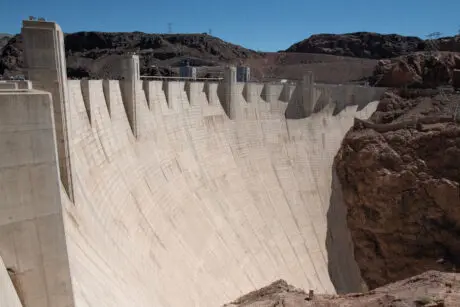
- Dams
- Retaining walls
- Culvert bedding
- Commercial and residential driveways
- Generally, any application that requires high-strength
The Consequences of High Slump
On the other end of the spectrum, high-slump mixes, such as those classified as S4 and up, are extremely easy to work with, mainly because they can easily flow around reinforcement and into tight spaces. They also result in better surface finishes with fewer defects. Very high slump (S5) mixes are even self-compacting and will reduce vibration.
The downside is that because high slump mixes have more water content, aggregates can settle and separate from the cement paste, cracking is more of a risk, the cure time is longer, and it results in concrete that’s not suitable for high loads.
Fixing High Slump
There are multiple ways to fix high-slump mixtures, if needed, including adding superplasticizers to reduce water content, adding specialized thickening agents, adding more cementitious materials like slag or silica fume, using viscosity modifying admixtures, or adding cement, although the latter is not the go-to solution because it increases project costs.
Common Use Cases for High Slump
- Pumping in high-rise or remote areas
- Trench-fill foundations
- Marine structures
- Bridge foundations
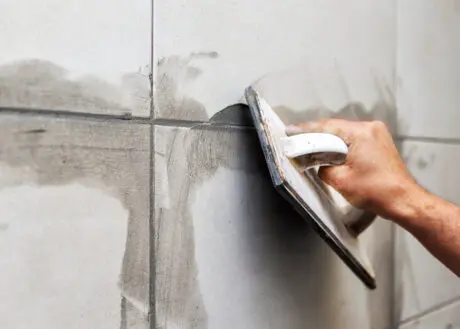
- Decorative architectural applications
- Repair overlays
- Grouting
- Large concrete pours
Let the Pros at G&G Handle the Details
If you don’t have experience working with concrete, you shouldn’t be working with it. Even if you’re skilled, the material is heavy, it can be challenging to work with, and it’s easy to make mistakes that ruin the final product, such as getting the mix wrong and not allowing the concrete to fully dry and cure.
G&G Concrete & Construction is here to take the guesswork out of concrete construction projects. You can visit our blog for more tips and resources, or contact us today to let us know how we can help you with your next project. We proudly help homeowners and business owners throughout Southeast Michigan.
