


Parking lot thickness can range from as little as 4 inches to 12 or more inches. Some parking lots that only see seasonal or light use may only have parking lots that are 4 inches think, while high-traffic areas, such as gas stations, have thicker concrete to withstand higher loads.
When determining thickness, contractors evaluate the factors that contribute to stress, strain, and deflection in the concrete, including traffic and environmental conditions.
What Impacts Thickness?
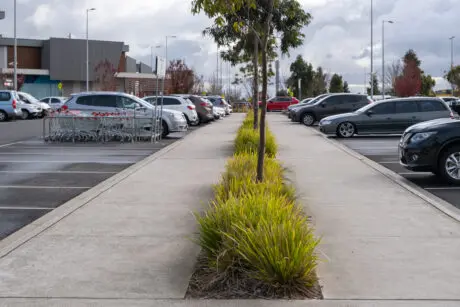
Existing Subgrade
The subgrade is the soil underneath the concrete that forms its foundation. The uniformity and strength of the existing subgrade influence the thickness of the concrete.
Subgrades are evaluated by k value and measured in pounds per cubic inch (pci). Fine-grained soils like clay have lower k values between 75 and 120 and provide low support, while stronger solid sand and sand-gravel mixtures can have k values between 180 and 220 and provide high support. The k value of the existing subgrade is determined by the soil type, density, and moisture.
Typical Load & Traffic
Concrete is strong, but it must be designed to withstand its expected load, and part of that is understanding what types of vehicles will be driving in the parking lot and at what frequency. There are four primary types of traffic categories:
- Category A: Car parking areas and access lanes (only includes standard passenger vehicles, light-duty pickup trucks, and panel trucks).
- Category A-1: Truck access lanes.
- Category B: Shopping center entrances, shopping center service lanes, lanes for city and school buses, and parking areas and interior lanes for bobtailed trucks.
- Category C: Entrance and exterior lanes for city and school buses and bobtailed trucks and parking areas and interior lanes for multiple truck units (truck with one or more trailers).
- Category D: Entrance and exterior lanes for multiple truck units.
The parking lot’s category will help determine the concrete’s thickness design.
Thickness Is Only One Factor of a Parking Lot Construction Job
A good parking lot design doesn’t just account for thickness. Other factors that can influence its longevity include the properties in the concrete mixture itself, the type of jointing used and how much space is between the joints, understanding where joint filling and sealing is needed, determining surface drainage needs, determining where curbs and islands are needed, and more.
Get Help Designing Your New Parking Lot
G&G Concrete and Construction has over 25 years of experience designing and installing concrete, including driveways, roads, parking lots, industrial floors, and more. A poorly installed parking lot will cost you more money down the road from premature cracks and deterioration. Work with a professional like G&G, and we’ll assess your location, work with you to determine the expected load, and provide an accurate quote based on the recommended thickness and materials needed for your lot.
Visit our website to learn more about our capabilities and past projects, or contact us today to get started with a free inspection.
